6 Brilliant Victorian Detective Series Featuring Male Protagonist(s)

The Victorian Era in British history spans from June 20, 1837, to January 22, 1901, during the reign of Queen Victoria, and mystery novels featuring gentleman detectives set in this period hold a truly captivating charm. Forensic science was still in its infancy back then—there was no DNA testing, no vast databases (Lincoln Rhyme would probably burst into tears if he ended up in this era), and even the concept of fingerprints didn’t emerge until near the turn of the century, let alone massive fingerprint matching systems. Horse-drawn carriages still rattled along bumpy cobblestone streets, but trains were becoming a new mode of transportation, suddenly expanding the variety of potential crime scenes. While industrial growth brought about the rise of the middle class, London was still home to vast numbers of the poor and underprivileged, with dim, shadowy alleys breeding all kinds of crime—making it the ultimate backdrop for detective fiction. Wrapped in chilly, gloomy weather and classic British architecture, even a mystery with a weaker plot or unpolished prose can still be thoroughly enchanting simply because of this irresistible atmosphere.
Of course, one couldn’t think properly in Paris- it was so uncomfortable and the houses were central heated. Here, where so many problems had been unravelled, there was a good fire… When cats sat starting into the fire they were thinking out problems.
Barker and Llewelyn Series by Will Thomas
| Fast Facts | |
| Protagonist(s) | Cyrus Barker: Private enquiry agent Thomas Llewlyn: Assistant enquiry agent |
| Primary Setting | 1880s-1890s London |
| Vibe / Subgenre | Underworld / Gritty / Atmospheric / Mentor-Protégé |
| First Book in Series | Some Danger Involved |
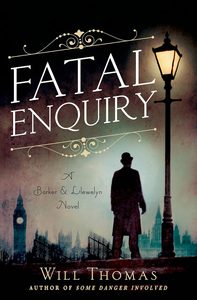
This is not your typical whodunnit detective story. Cyrus Barker is mysterious, connected to the underworld, skilled in hand-to-hand combat, fiercely disciplined, and a true connoisseur of food and tea. Thomas Llewelyn applies to be Barker’s assistant as a last-ditch effort before throwing himself into the Thames. He becomes the protégé, learning everything at a breakneck speed just to aid in investigations without getting himself killed.
Their cases involve far more than just murders—they navigate the dark undercurrents of London and the complex world of high-stakes politics. On top of solving mysteries, Barker and Llewelyn must maneuver gracefully yet confidently to achieve their goals. It’s a series packed with a noir underworld vibe, plenty of action, and sharp, dry wit.
Railway Detective Series by Edward Marston
| Fast Facts | |
| Protagonist(s) | Robert Colbeck: Detective Inspector of Scotland Yard Victor Leeming: Sergeant |
| Primary Setting | 1850s-1860s England railyway network |
| Vibe / Subgenre | Whodunnit / Historical Procedural / Cozy |
| First Book in Series | The Railway Detective |
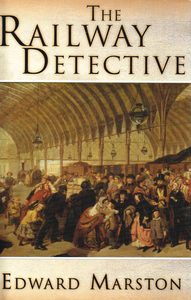
Robert Colbeck is a sharp, self-made young man from a working-class background who is impeccably dressed and well-mannered. Paired with Victor—a rugged, straight-shooting partner whose main goal after work is just to head home to his wife and a warm bed—the two create a wonderfully balanced dynamic.
Since the stories are set in the 19th century, the investigations rely on old-fashioned bootwork—pounding the pavement, interviewing suspects one by one, and ruling them out. While the pacing could be a bit of a slow burn, it keeps a compelling pace given the historical period. It is also a very interesting contrast to other train mysteries such as Agatha Christie’s The Orient Express and Kyotaro Nishimura’s Midnight Train.
Frey and McGray Mystery by Oscar de Mauriel
| Fast Facts | |
| Protagonist(s) | Ian Percival Frey: Inspector from Scotland Yard Adolphus “Nine-Nails” McGray: Scottish inspector |
| Primary Setting | 1880s Edinburgh and London |
| Vibe / Subgenre | Gothic / Supernatural |
| First Book in Series | The Strings of Murder |
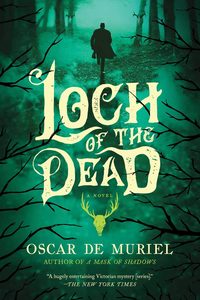
Frey is a Scotland Yard elite hailing from a wealthy family, while McGray is a Scottish detective whose style couldn’t be more different. Together, the two team up to solve cold cases involving supernatural phenomena (much to Frey’s dismay.)
After his parents were murdered by his mentally ill sister, McGray set off on a point-of-no-return journey to unravel supernatural mysteries (Wait… doesn’t this setup sound a bit like Mulder from The X-Files?). Although his family originally made a fortune in business, he’s been haunted by sleepless nights since the tragedy, turning to heavy drinking whenever he worries about his sister. He speaks with a thick Scottish accent, has zero patience for fancy words, and is basically the classic rough-around-the-edges, rugged hero type. Frey, on the other hand, is an aristocratic son shunned by his father and brother, struggling to find his own path (to make matters worse, his fiancée left him to marry his brother—talk about hitting rock bottom). Though he detests the London high society scene, he still does his best to maintain his gentlemanly composure in everything he does.
The first book in this series is utterly captivating, doing a great job introducing the lead duo’s backgrounds and personalities while serving up an intriguing case. The second book almost made me drop the series, though—McGray loses his mind over his sister and physically turns on Frey, which definitely crossed a personal pet peeve of mine. But by book three, having seen the absolute worst of each other, they slowly get used to one another’s quirks and styles. They evolve into a fantastic crime-solving duo who bicker constantly yet sync up seamlessly on the job.
The McGray and Frey series is truly a perfect fit for former X-Files fans. Just like Mulder, McGray embarked on this dark path for the sake of his sister, working in a specialized law enforcement unit dedicated to abnormal cases. Whenever an unusual crime occurs, both men act as the voice of reason who untangle the real (non-supernatural) truth behind the mystery, all while hunting for their own personal closure along the way. He’s a bit unhinged, but undeniably charming. Frey, much like Scully, feels utterly cursed by his luck at first, but as he spends more time with his partner, he begins to see his genuine heart and strengths, gradually becoming his biggest supporter.
One of my favorite series of all time. Kept hoping the author would write an epilogue of some sort to bring the Frey and McGray together gain, but he has moved on to other work. One can only hope!
Sherlock Holmes by Sir Arthur Conan Doyle
| Fast Facts | |
| Protagonist(s) | Sherlock Holmes John Watson |
| Primary Setting | 1880s to Edwardian Era London |
| Vibe / Subgenre | Dark Academia / Gloomy |
| First Book in Series | A Study in Scarlet |
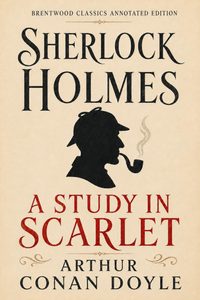
Need I say more?
“When you have eliminated the impossible, whatever remains, however improbable, must be the truth.”
Charles Lenox series by Charles Finch
| Fast Facts | |
| Protagonist(s) | Charles Lenox |
| Primary Setting | 1860s-1870s London |
| Vibe / Subgenre | Cozy |
| First Book in Series | A Beautiful Blue Death |
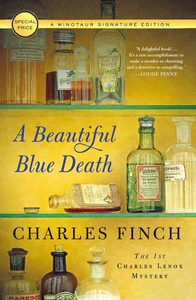
The protagonist is an eligible bachelor from the Victorian British aristocracy who stumbles into becoming an amateur detective by chance. Back then, Scotland Yard had yet to find its footing, and investigations were overseen by a former military officer who was far more interested in social climbing than actually solving crimes.
First, the Pros:
- A positive, engaging protagonist: Although he’s an aristocrat, he’s an accomplished academic in his own right, with crime-solving as just an amateur hobby. He isn’t afraid of hard work, traveling all over the place to chase down leads (I really want to say that good old-fashioned footwork is key after all, but given his noble status, I do wonder why he isn’t an armchair detective instead…).
- Atmospheric details: The descriptions of clothing and food successfully evoke the Victorian era, allowing you to easily picture scenes reminiscent of a Netflix British drama (though posh food sounds very boring).
- Solid plotting: The first book feels like a blend of two classic mystery novels (I won’t name them to avoid spoilers), and while it might not be groundbreakingly original, it’s a smooth, steady read.
- Witty dialogue: Some of the banter is genuinely funny—like, “… the nephews are a plague, sent to humble us before God.”
The Cons:
- Anachronistic language & loose class boundaries: As other readers have pointed out—perhaps to cater to modern audiences—some of the word choices feel distinctly American or even modernly colloquial. The rigid class boundaries of the era are also handled rather loosely (and not just with the main character), which occasionally pulls you out of the story. However, since the author admits this is essentially a Victorian AU, it isn’t a dealbreaker if you don’t mind that style.
- The Book Cover: I previously saw this book on a library recommendation shelf, but because the cover looked like a short, lightweight cozy mystery, I passed on checking it out for a long time.
- Repetitive details: It feels like in every single chapter, Lenox is either drinking tea, eating breakfast, or thawing himself out by the fireplace. At times, it really feels like he’s reliving the exact same day over and over while hunting for clues!
Lord Peter Wimsey by Dorothy L. Sayers
| Fast Facts | |
| Protagonist(s) | Lord Peter Wimsey Charles Parker: Scotland Yard detective Mervyn Bunter: Lord Wimsey’s valet |
| Primary Setting | 1920s-1930s London |
| Vibe / Subgenre | Whimsical |
| First Book in Series | Whose Body? |
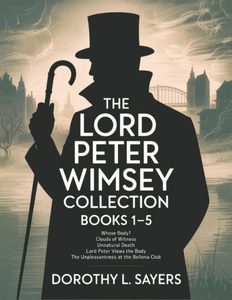
*Not really Victorian but interwar, but hey, Lord Wimsey was born in the Victorian era! And for that matter, you might as well read the Heathcliff Lennox Series by Karen Baugh Menuhin.
Lord Peter Wimsey is an aristocratic detective created by author Dorothy L. Sayers, born in the Victorian era as the second son of a duke. Addressing him as “Lord” is a courtesy title—he actually has no rights of succession to the dukedom, nor can he take a seat in the House of Lords. Although he attended Eton College, he was initially teased at school due to his slight stature and gentle temperament, though he eventually made a name for himself once he took up cricket. He later studied history at Oxford, achieving academic distinction and becoming quite the campus figure. He loves collecting rare books and holds more open-minded, liberal views compared to his title-inheriting older brother. As a result, he is thoroughly disliked by his duchess sister-in-law, though he remains dearly loved by his mother and his labor-supporting younger sister.
He served in World War I, where he met Bunter—the man who would later become his personal valet. After suffering through the war and being jilted by his fiancée, he retreated into a long period of quiet seclusion, only rediscovering a purpose in life after finding his passion for detective work. In the post-war years, he still suffers from occasional bouts of PTSD, and immersing himself in crime-solving serves as his primary way to keep his mind occupied.
Lord Peter has two key friends and sidekicks when solving crimes: Charles Parker, the indispensable police detective found in every good mystery, and Mervyn Bunter, the all-capable valet essential to any proper aristocrat. Parker is by no means the incompetent policeman so often found in mystery fiction. Instead, he’s a brilliant detective in his own right who can bounce deductions back and forth with Peter, while also putting in the grounded, foot-leather work of gathering leads on the street. When sent on a business trip to Paris, he can unselfconsciously buy lingerie for his sister without batting an eye (no sister complex here—he’s actually secretly pining after Peter’s sister, Lady Mary). He never steals credit from others and balances the strict letter of the law with genuine human empathy.
Bunter, as a valet, is written with even greater charm! Though his character is slightly larger than life, his dress and conduct are utterly flawless. He executes his daily care for Wimsey with the highest standards, yet when Wimsey has a nightmare, he can sit by the bedside and softly sigh, “Bloody little fool.” He is always one step ahead of his master—spotting news that needs attention, tracking down rare book releases, or pulling together a last-minute train timetable in an instant. In investigations, he uses his photography skills to capture crime scene photos and lift fingerprints; he can even leverage his impeccable manners and quiet charm to extract useful testimony. Wimsey trusts him implicitly and discusses cases with him, though Bunter exercises the exact same strict boundaries here as he does everywhere else—listening attentively while offering no opinion. Even when it is just the two of them, he strictly addresses Wimsey as “my Lord,” and after making a bed in the corner of the room to tend to an injured Wimsey, he doesn’t forget to ask for forgiveness the next morning. (And one must read the Heathcliff Lennox series to see Gregg!)
Honestly, these three have the total dynamic of a classic BL trope! But since that genre wasn’t around back then, all three eventually end up with their own respective partners.
“…is my manner really offensive, when I don’t mean it to be?”
“It is possible, my lord, if your lordship will excuse my saying so, that the liveliness of your lordship’s manner may be misleading to persons of limited- “
“Be careful, Bunter!”
“Limited imagination, my lord.”
“Well-bred English people never have imagination, Bunter.”
Dorothy Sayers’ characterization is so vivid that you can easily tell who is speaking just from the dialogue. Her descriptive details are wonderfully rich, allowing you to clearly visualize every scene in your mind’s eye. When it comes to mystery-solving, the clues are laid out quite well. The overall investigation process can feel a bit drawn out, but if you stop to think about it, given an era with no security cameras and fingerprint forensics still in their infancy, that kind of timeline and page count makes complete sense. What might test a reader’s patience, though, is that Lord Peter himself is an absolute chatterbox. Add in his mother—who also can’t stop talking once she gets going—and there are moments where you just want to cover their mouths and tell them to hurry up and push the plot forward.